COCOA
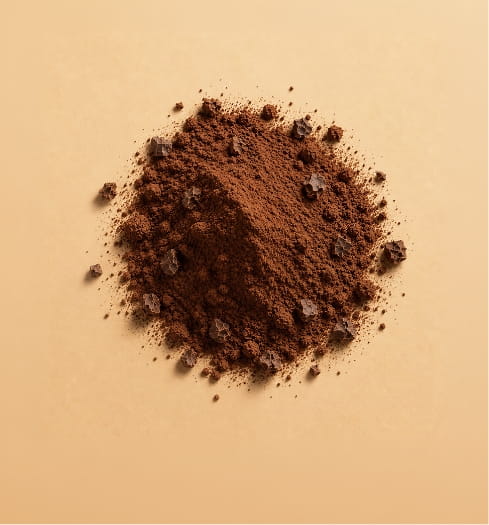
Cocoa is a tropical plant whose fruits, called pods, contain seeds: cocoa beans. These beans are fermented, dried, then processed to produce cocoa, chocolate, or cocoa butter.
The cocoa bean is naturally rich in antioxidants, particularly flavonoids, as well as fiber and healthy fats. It mainly provides minerals such as magnesium, iron, potassium, zinc, copper, phosphorus, and manganese. In terms of vitamins, it contains small amounts of B vitamins, particularly B1, B2, B3, and B9, as well as vitamin E.
- Sao Tome
- Peru
PRODUCERS
Working with a supply chain means being aligned with our CSR values:
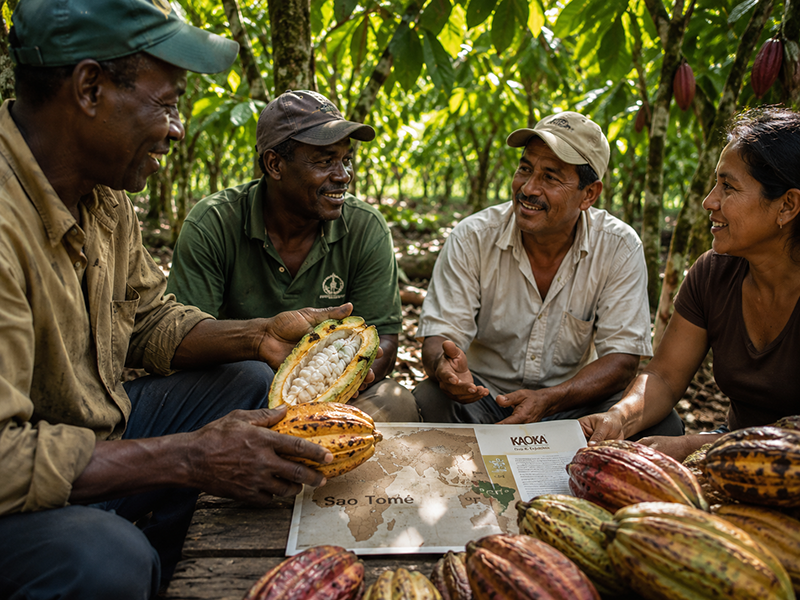
Reducing intermediaries allows us to foster long-term relationships with our producers by ensuring them a fixed annual price before harvest. By guaranteeing the stability of their employment, they can live decently while planning the development of their farms.
The cocoa used in our products comes from the Organic & Fair Trade supply chain, controlled according to the Fair For Life standard, where several suppliers have a traceability system, ensuring transparency throughout the production chain. Working to improve producers’ standard of living, they use the Fair Trade premium for various infrastructures, training, social and environmental developments, etc.
Our suppliers through our intermediary Kaoka:
CECAB in São Tomé COOPERATIVA AGRARIA DE CACAO AROMATICO COLPA DE LOROS in Peru
In addition to certifying Organic and Fair Trade production, this supply chain ensures the balance of taste! With precise knowledge of the origin of the ingredients, we can guarantee stability in our recipes and already start thinking about our future innovations.

Flowering/harvest
The cacao tree flowers almost all year round in a tropical climate. Its small flowers grow directly on the trunk and large branches, a phenomenon called cauliflory. Only a small proportion of the flowers will produce a fruit.
After pollination, the fruit, called a pod, takes about 5 to 6 months to ripen. Harvesting is generally done by hand, using a machete or a cutting tool, so as not to damage the tree.
The ripe pods are opened to collect the cocoa beans, which are surrounded by a sweet white pulp. The beans are then fermented, dried, and prepared to be processed into cocoa or chocolate.
Manufacturing
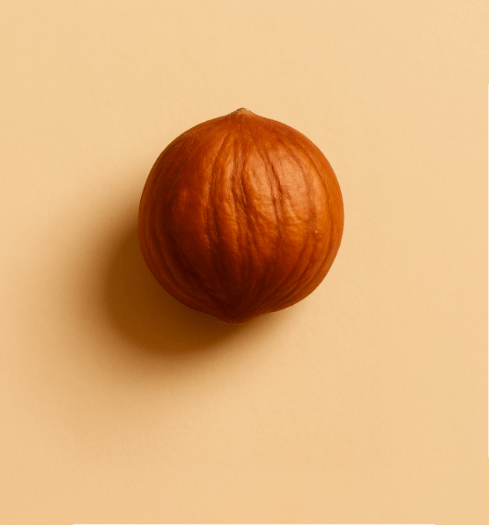
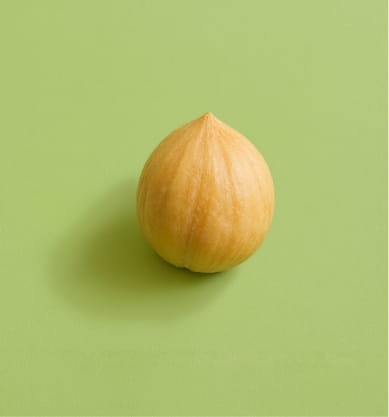
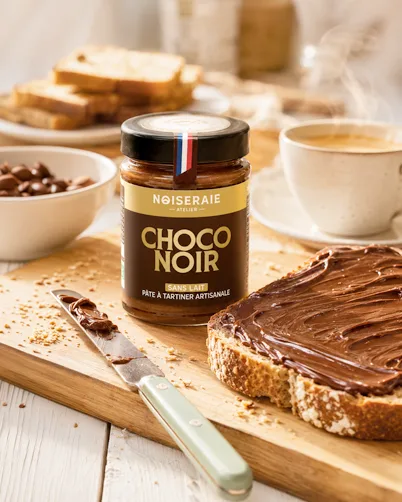
In Noiseraie spreads, cocoa is incorporated into pre-ground dried fruits, such as hazelnuts, to create a rich, smooth base. The mixture is worked gradually to thoroughly bind the ingredients and develop a homogeneous texture.
The preparation is then subjected to slow cooking, which brings out the aromas of the cocoa and dried fruits without overwhelming them. After cooking, cooling is done manually, through regular raking, to better control crystallization, texture, and the consistency of the spread.
This expertise makes it possible to obtain a spread with balanced aromas and a controlled, melting, indulgent texture.
The origin of conventional raw materials
ORGANIC France - Non-conventional United States, Australia, Portugal or Spain.
Turkey, Azerbaijan, Georgia, France, Italy.
Vietnam, Togo, Nigeria, Ivory Coast, Benin, USA, Mexico, Ghana.
USA, Mexico.
United States or Iran.
China, Russia.
Orange River of South Africa, Turkey.
France.