
SESAME
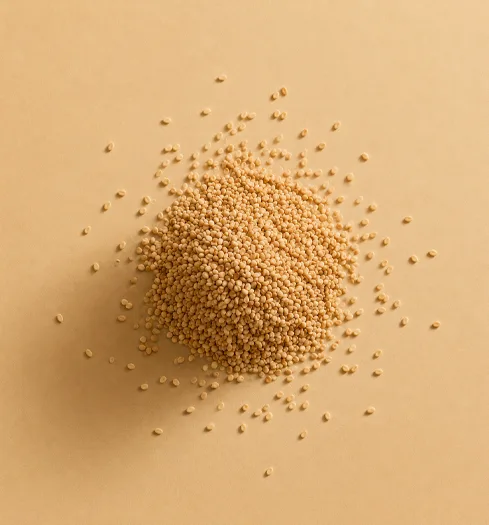
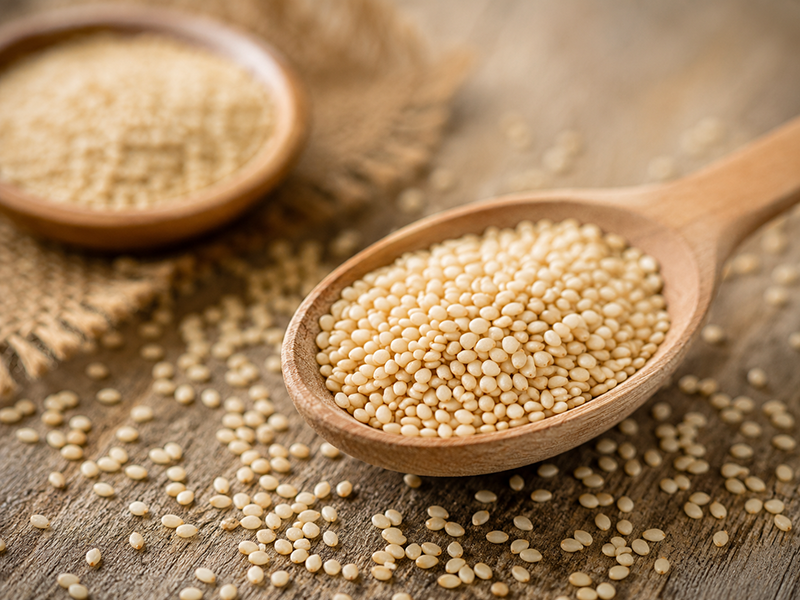
Sesame is an oilseed plant whose seed is eaten.
Sesame seeds have many nutritional benefits: they provide unsaturated fatty acids, vitamin B1, magnesium, phosphorus, calcium, and iron. They also contain vitamin B2, potassium, and plant-based proteins.
- Egypt
- Paraguay
- Uganda
PRODUCERS
Programs are underway.
Flowering/harvest
Sesame is an annual plant with yellow, mauve, white, or purple flowers. The plant has capsules on its stem that contain many sesame seeds, from 50 to 100, sometimes up to 200.
Harvesting begins when the lowest capsules start to open. The plants are cut, gathered into sheaves, and left to dry. They are then shaken upside down over a tarp to collect the sesame seeds.
Manufacturing
Sesame seeds are mechanically processed due to their small size.
The process is almost identical to that used for other nuts: the seeds are steamed for a few seconds in order to remove their husks. Once dry, the sesame seeds are cold-ground on a stone mill. The sesame is raw, which helps preserve its authentic taste and nutritional qualities.
Following the sesame crisis, we would like to remind you that we have removed India from our list of suppliers and that no sesame seed enters Perl'Amande without being analyzed. To secure our supply, we cooperate with the following countries: Uganda, Paraguay, Bolivia, and Egypt.
The origin of conventional raw materials
ORGANIC France - Non-conventional United States, Australia, Portugal or Spain.
Turkey, Azerbaijan, Georgia, France, Italy.
Vietnam, Togo, Nigeria, Ivory Coast, Benin, USA, Mexico, Ghana.
USA, Mexico.
United States or Iran.
China, Russia.
Orange River of South Africa, Turkey.
France.